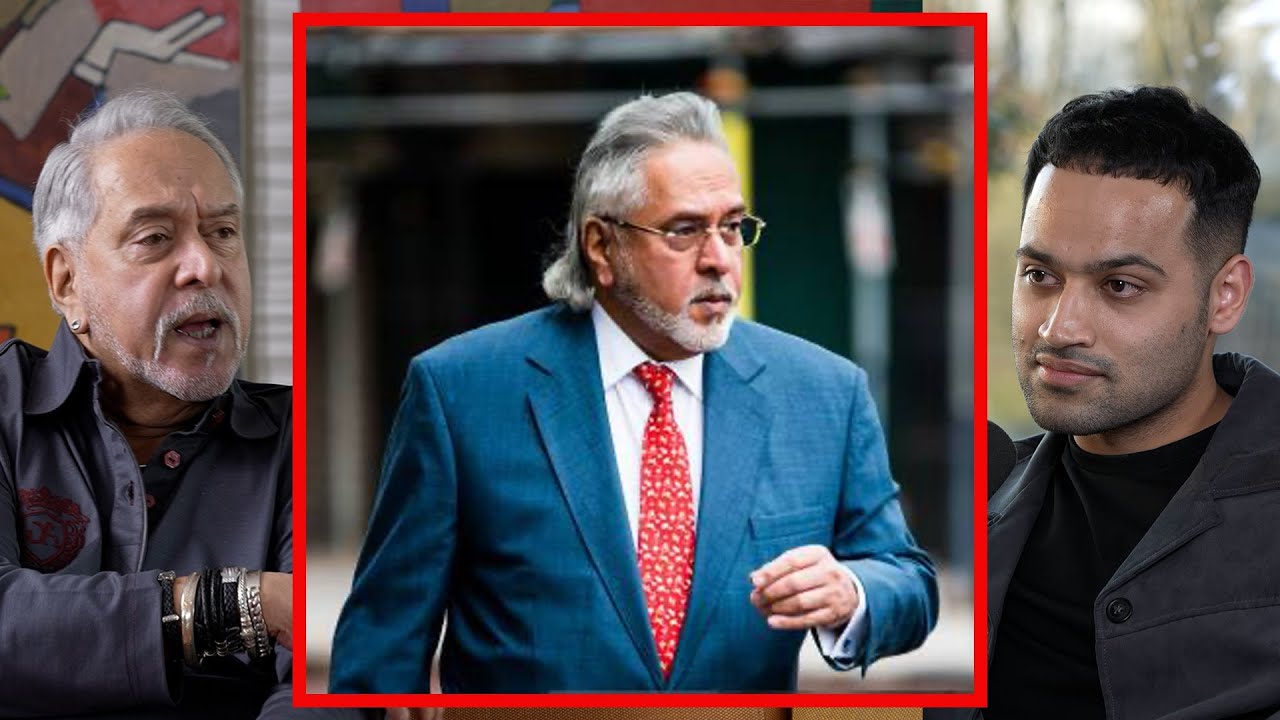
In his long-awaited interview with Raj Shamani, India’s well-known “bad boy billionaire” Vijay Mallya spoke for the first time in nearly nine years. The conversation touched on allegations of fraud and money laundering, the collapse of Kingfisher Airlines, and his broader views on media, politics, and business in India.
Below is a summary of the Podcast in a Q&A format:
Q1: Why did Vijay Mallya choose to speak out now after nearly nine years of silence?
A:
Mallya stated that his decision to share his side of the story was driven by what he described as a “vicious, relentless trial by media.” Traditional outlets, he felt, had twisted his narrative, leaving him without an opportunity to express his perspective. The Indian government’s recent acknowledgment of recovering over ₹14,100 crore, in contrast to prevailing media narratives, further pushed him to use the podcast platform to provide a more balanced account.
Q2: What does Mallya say about the debt allegations and the actual figures involved?
A:
Mallya disputes the commonly cited debt figure of ₹9,000 crore. Instead, he points to a Debt Recovery Tribunal (DRT) certificate that lists the loan amount as ₹6,203 crore (including both principal and unapplied interest). He also emphasizes that the Indian Ministry of Finance’s annual report confirmed a recovery of over ₹14,100 crore, arguing that this robust recovery challenges the narrative of financial misappropriation.
Q3: Does Mallya admit to being a fugitive or a “chor” (thief)?
A:
Mallya firmly denies being either. He explains that his departure from India in March 2016 was not an act of flight but a pre-scheduled visit to Geneva, with proper communication about his travel made to the then finance minister Arun Jaitley. Mallya contends that labeling him as a “chor” is unfounded, especially when compared against the financial recovery figures he cites.
Q4: What factors does Mallya attribute to the downfall of Kingfisher Airlines?
A:
According to Mallya, a mix of external pressures and internal decisions led to the collapse of Kingfisher Airlines. He cites the global financial crisis of 2008, the impact of soaring fuel costs due to international crude prices and state sales taxes, and challenges in securing foreign investment. He also reflects on advice he received during the crisis—specifically, a suggestion not to downsize the airline—which he now believes may have contributed to the eventual financial strain.
Q5: Did Mallya express regret or offer an apology concerning Kingfisher Airlines and its impact?
A:
Yes, Mallya expressed deep regret over the failure of Kingfisher Airlines. He extended a heartfelt apology to his former employees, many of whom lost their jobs or faced salary issues. Mallya acknowledged full responsibility for the collapse, highlighting a specific instance where he attempted to use available funds (₹260 crore from UBHL cash) to meet salary obligations, only to face legal and banking obstacles.
Q6: What does Mallya reveal about his interactions with key political figures such as Arun Jaitley and Pranab Mukherjee?
A:
Mallya recounted brief yet significant interactions with prominent figures like former finance ministers Arun Jaitley and Pranab Mukherjee. He mentioned a fleeting meeting with Jaitley in Parliament before his departure, during which he indicated his plan to attend a pre-scheduled meeting in Geneva. Additionally, he described a conversation with Pranab Mukherjee during the 2008 financial crisis, where he was advised against downsizing Kingfisher Airlines—a decision he later regarded as pivotal in the airline’s financial troubles.
Q7: What are Mallya’s views on the ease of doing business in India?
A:
Mallya characterized the Indian business environment as overly bureaucratic and politically challenging. He lamented the need to maintain favorable relationships with numerous political figures—a necessity he humorously described as staying on the “good books of 29 chief ministers.” According to him, these political and bureaucratic hurdles obstruct straightforward business operations and contribute to a challenging entrepreneurial landscape.
Q8: How does Mallya describe his involvement with the IPL and Royal Challengers Bangalore (RCB)?
A:
Mallya discussed his entry into sports via the creation of the IPL franchise Royal Challengers Bangalore (RCB). He viewed the Indian Premier League as a groundbreaking platform for cricket and brand promotion. His investment of around $112 million in RCB was aimed at leveraging the sport to promote his Royal Challenge whiskey brand. He also revealed that his selection of Virat Kohli, spotted during the Under-19 World Cup, was based on a strong gut feeling about the young player’s potential—a move reflecting a calculated, business-driven approach rather than mere vanity.
Q9: What is Mallya’s stance regarding allegations of siphoning or misusing funds?
A:
Mallya is unequivocal in dismissing any claims of siphoning funds or misusing the proceeds of loans. He states that the funds, including a notable infusion of ₹3,000 crore from UB Group into Kingfisher Airlines, have been consistently accounted for. In his narrative, the normal financial requirements of operating an international airline have been misconstrued as acts of misappropriation. Consequently, he argues that the official recovery figures and documented transactions undermine the allegations of financial misconduct.
Q10: What does Mallya say about his current situation and his willingness to return to India?
A:
Currently embroiled in legal battles both in the UK and India, Mallya describes his life as markedly scaled down since his passport was revoked in 2016. Despite facing prolonged legal challenges and restricted mobility, he remains open to the possibility of returning to India—provided he is granted a fair trial and assured of dignified treatment. His remarks underscore a pragmatic acceptance of his current circumstances coupled with a hope for judicial fairness and respect for due process.
Mallya’s revelations in the podcast not only offer a detailed look into his personal experiences and business judgments but also raise broader questions that merit reflection:
- Impact on Public Perception: How will Mallya’s refusal to accept labels like “fugitive” or “chor” and his presentation of alternative narratives shape ongoing debates about media bias and public trust? His assertions challenge entrenched media narratives, potentially influencing future public discourse on accountability.
- Future of Corporate Governance: The details of Kingfisher Airlines’ collapse and the financial figures discussed could spark wider discussions on crisis management and corporate governance within the business community. This case might prompt reviews of oversight practices and risk management strategies in high-profile companies.
- Legal and Political Implications: Mallya’s insistence on a fair trial and humane legal procedures touches on sensitive aspects of extradition and human rights in detention conditions. His case underscores the potential consequences of politically and bureaucratically driven judicial processes, inviting debate on how legal systems handle complex financial and accountability cases.
As we digest these insights, the conversation surrounding high-profile business failures, media narratives, and the interplay of politics and justice continues to evolve. Each layer of Mallya’s story invites further exploration and a deeper consideration of how public figures are both judged and remembered.