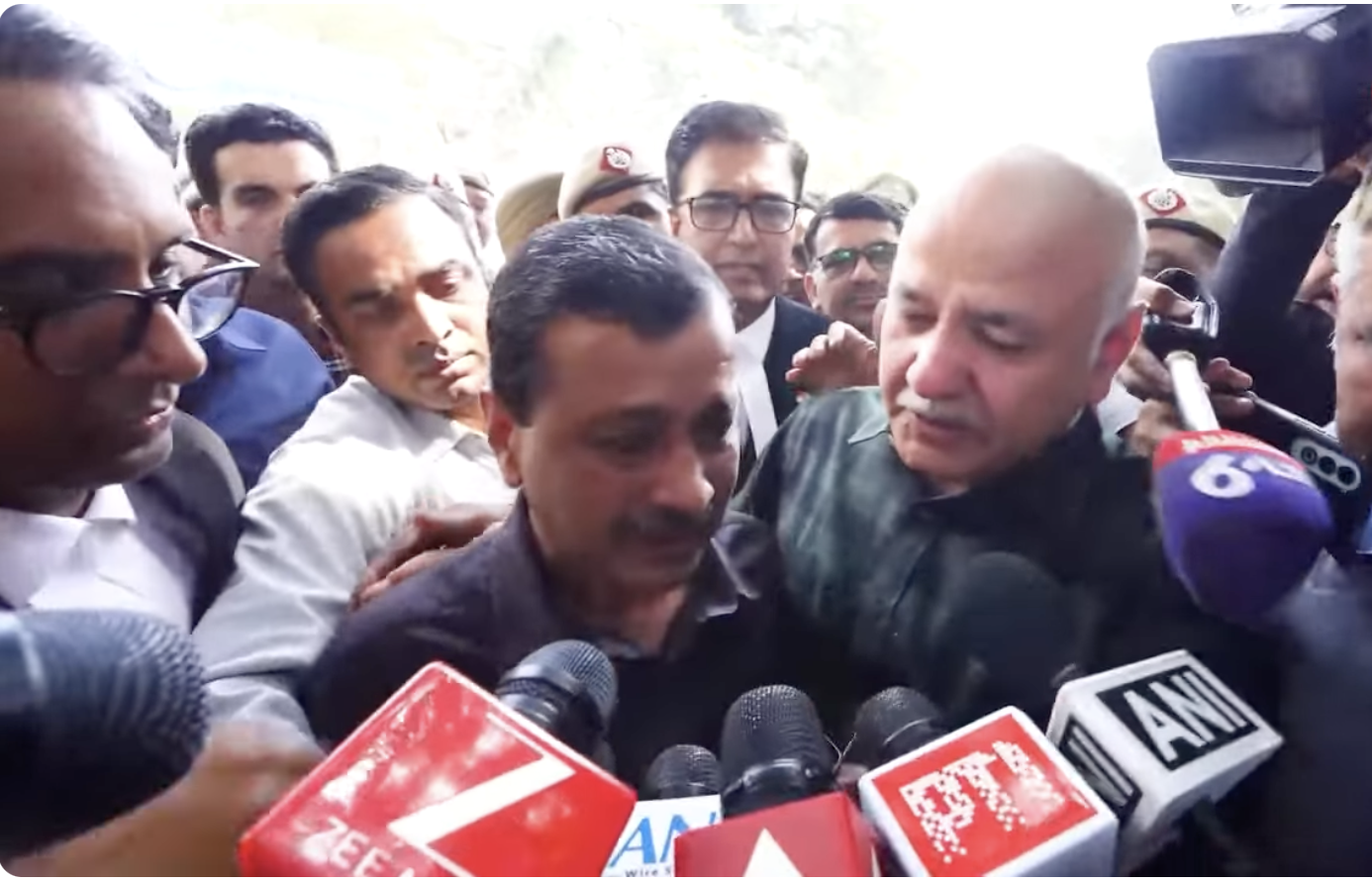
New Delhi: The discharge of Arvind Kejriwal, Manish Sisodia, and several others in the Delhi Excise Policy case by a special CBI court marks a significant turning point in a legal battle that has spanned years. Special Judge Jitendra Singh issued a 600-page order, effectively dismantling the Central Bureau of Investigation’s case by stating that the agency failed to meet even the minimum legal threshold required to frame charges. The court found that the evidence presented did not establish a “prima facie suspicion,” let alone the “grave suspicion” necessary to proceed with a criminal trial, leading to the discharge of 23 individuals, including Telangana Jagruthi president K. Kavitha.
In its detailed analysis, the court described the CBI’s theory of a wide-ranging conspiracy as speculative and unsupported by admissible evidence. The prosecution had argued that the excise policy was manipulated to favor a “South Group” of businessmen and politicians in exchange for kickbacks. However, the court found that the documentary record told a different story. According to the judge, official file notings demonstrated that the policy was the result of a legitimate consultative process involving stakeholders. The court specifically pointed out that the government had even sought and incorporated suggestions from the Lieutenant Governor, despite there being no statutory requirement to do so, which reinforced the procedural integrity of the policy-making exercise.
Beyond the lack of evidence, the court was sharply critical of the CBI’s investigative approach. The judge observed that the agency appeared to have followed a “predetermined trajectory,” attempting to implicate nearly everyone associated with the policy to bolster a fragile case theory. The court also rejected claims that irregularities were linked to the Goa Assembly elections, noting that the agency’s arguments regarding the layering of funds were built on assumptions rather than legally sustainable facts. A significant portion of the judgment focused on the agency’s reliance on approver statements, with the judge warning that the power to grant pardons should be used to uncover the truth rather than to construct a specific narrative.
In an unusual move, the court recommended a departmental inquiry against the CBI officials involved in naming former deputy excise commissioner Kuldeep Singh as the primary accused. The judge also took issue with the agency’s use of the term “South Group” for certain defendants, noting a lack of similar regional labeling for others. Ultimately, the court concluded that the prosecution’s narrative of a larger conspiracy collapsed when tested against the actual records, leading to the full discharge of all accused parties in this specific CBI case.