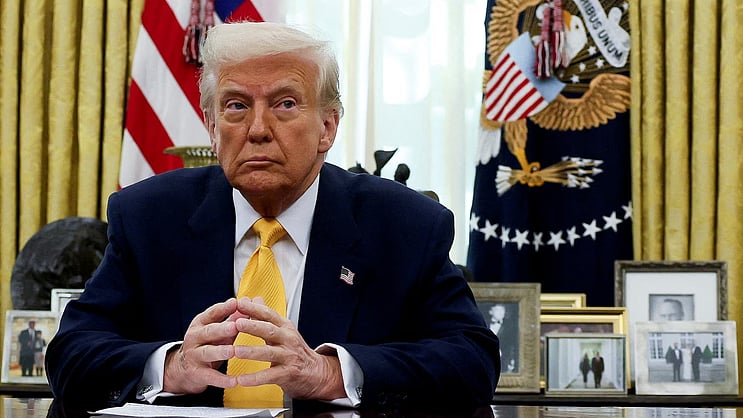
Washington, D.C. — In a massive 6–3 ruling this Thursday, the U.S. Supreme Court officially pulled the plug on those sweeping tariffs from the Trump era. The Court decided that the executive branch went way out of bounds by using the International Emergency Economic Powers Act (IEEPA) to tax imports. While the ruling effectively kills tariffs on goods from China, Mexico, and Canada, it leaves a giant, messy question: what happens to the $170 billion already collected?
The majority opinion was pretty blunt. They pointed out that while the president has emergency powers, the Constitution says the power to tax and levy duties belongs to Congress, period. Since Congress never explicitly gave the president the right to just invent taxes under the guise of an “emergency,” those tariffs are now legally void.
Let’s Be Real: This Was Long Overdue
Honestly, it is about time we had some clarity here. For years now, we have watched the executive branch treat “emergency powers” like a blank check to mess with global trade. Whether you like the previous administration or not, the principle should be simple: one person should not have the power to single-handedly build a wall around the economy.
I have always believed that people should be able to move, work, and trade wherever they want. High tariffs are basically just government-mandated borders on products. They do not just hurt “foreign companies”; they hurt the person trying to buy a laptop or the small business owner trying to source parts. When the government decides to arbitrarily tax trade, they are essentially taking a cut of your freedom to do business with whoever you choose.
The $170 Billion Elephant in the Room
The Court was very brave in saying the tariffs were illegal, but they went suspiciously quiet when it came to the money. We are talking about $170 billion that was taken from businesses and, by extension, from the pockets of regular people who paid higher prices.
Right now, that money is just sitting there. The Court did not give a roadmap for refunds, which means we are headed for a legal nightmare. Lawyers are already telling companies to file protests, but it could take years to see a dime. It feels like a classic case of the “big guys” (the government) taking money they weren’t supposed to have and then making it nearly impossible for the “little guys” to get it back. If a regular person took money illegally, they would be in a cell. When the government does it, we call it a “complex administrative challenge.”
The Pivot: Same Game, Different Name?
Not even a few hours after the ruling, the current administration decided to pivot. They are now looking at Section 122 of the Trade Act of 1974 to slap on a new 10% to 15% “temporary” tariff. They say it is for “balance-of-payments” and to “stabilize” the industry.
Is it just me, or does this feel like moving the goalposts? If the goal is to protect freedom of expression and the freedom to do business, then playing “statute roulette” to keep taxes high is not the answer. It creates constant uncertainty. Markets are already jumping around because businesses do not know what things will cost next week. This kind of volatility mostly hurts the poor and the middle class, who cannot afford to hedge their bets like the ultra-wealthy can.
Who is Taking the Government to Court?
While the legal dust is still settling, several heavy hitters are already lining up to get their money back. These are the industries that didn’t just take the hit—they kept the receipts:
- Retail and Consumer Goods: Organizations like the National Retail Federation are leading the charge. Companies like Costco and thousands of small businesses have already filed suits. They’ve been forced to raise prices on everything from clothes to household goods, and they want that “tax” returned to their operations.
- The Auto Industry: This sector was hit particularly hard because their supply chains are a spiderweb crossing the borders of Mexico and Canada. Major car manufacturers and parts suppliers are fighting to recoup costs that made vehicles thousands of dollars more expensive for the average buyer.
- Tech and Semiconductors: Since so many electronics flow through China, tech giants and hardware manufacturers are looking at massive potential refunds. They’ve been paying duties on the very components that drive modern life.
- Manufacturing (Steel, Aluminum, and Copper): While some “national security” tariffs remain, those imposed under the now-defunct IEEPA emergency orders have left industrial giants like Alcoa and copper importers demanding a seat at the table.
- Apparel and Footwear: Groups like the American Apparel and Footwear Association are pushing for “automatic” refunds, arguing that their members—many of whom are small businesses—don’t have the legal departments to fight a decade-long court battle for money that was taken illegally.
Why This Matters Beyond the Dollars
At the end of the day, this isn’t just about trade policy. It is about whether we believe in a world with fewer barriers or more of them. Wars are fought over resources and borders, and trade wars are just a quieter, slower version of that same conflict. When we make it harder for people to trade across a line on a map, we are reinforcing the idea that someone on the other side of that line is an “other.”
The Supreme Court got it right on the law: the president isn’t a king and cannot tax us at will. But until we stop using trade as a weapon, we are just going to keep having these same arguments under different names.