A village festival in Telangana’s Nagarkurnool district, intended to be a time of celebration, has instead become the epicenter of a harrowing tragedy. The death of a two-month-old baby girl has not only devastated a family but has exposed deep-seated caste fault lines, leading to allegations of brutal violence and systemic bias.
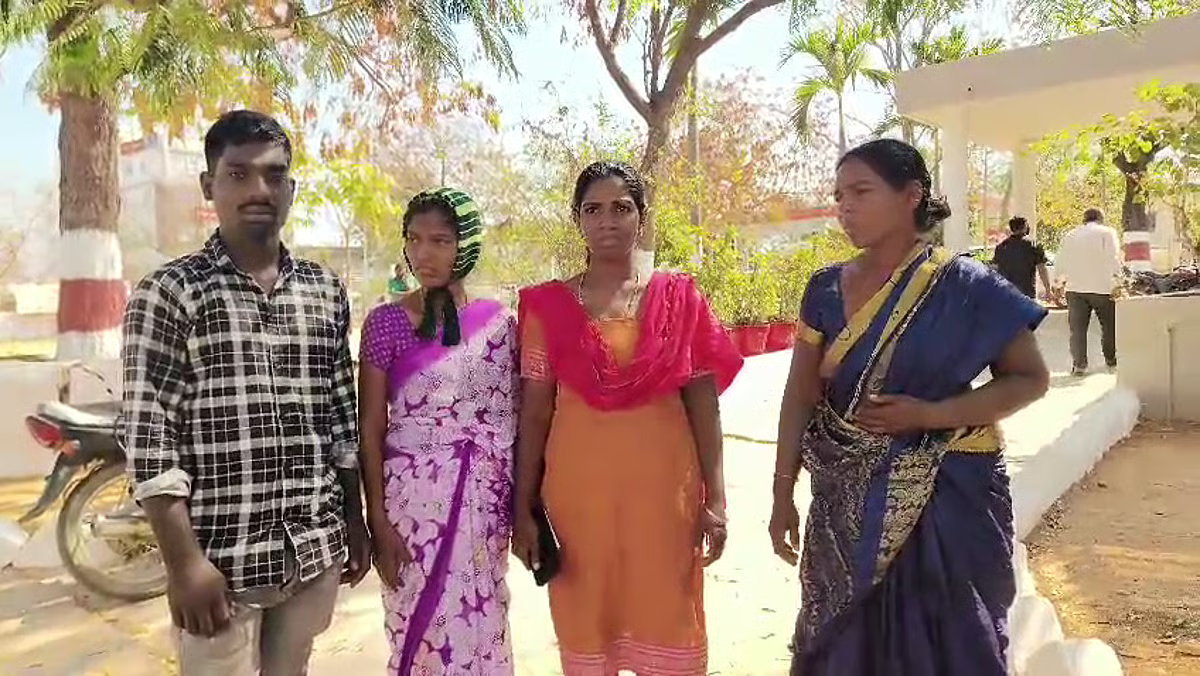
The unrest began on February 18 during the Kummera Mallikarjuna Swamy Jatara. What started as a dispute over temple queue management quickly spiraled into a confrontation involving Mounika—a woman from the Scheduled Caste community—and her husband Ganesh’s relatives, who belong to the Chakali (Backward Class) community. Reports suggest the friction ignited when Srinivas Reddy, who was overseeing the temple lines, engaged in a heated argument with the family. The situation turned personal when Ganesh later took to a village WhatsApp group to accuse Reddy of disrespecting the women in his family.
The digital grievance was met with physical retaliation. Ganesh alleges he was ambushed by a mob of nearly 30 men from the Reddy community, dragged into a storage room, and severely beaten. In the chaos of the assault, Mounika—clutching her infant daughter—reportedly rushed into the fray to plead for her husband’s life. It was during this struggle that the family claims the child was fatally injured, with Ganesh alleging one of the attackers went as far as to kick the infant.
While the violence was immediate, the legal response was not. On the day of the clash, police prioritized a complaint from Srinivas Reddy, citing his visible head injuries, while the BC family’s counter-complaint was merely noted in a general diary. This disparity in treatment has fueled the family’s accusations that local authorities initially favored the more influential community.
The situation turned from a violent feud to a tragedy on February 21, when Mounika discovered her baby unresponsive. Following the infant’s death, public outrage forced a shift in the investigation. Authorities have since arrested Srinivas Reddy, Madhusudhan Reddy, and Srikanth Reddy, slapping them with charges of attempted murder and violations of the SC/ST (Prevention of Atrocities) Act.
However, the police narrative remains cautious. While the family insists the child died from injuries sustained during the February 18 assault, Deputy Superintendent of Police Burri Srinivas noted that no external injuries were visible during the preliminary inspection. The official cause of death now hinges entirely on a pending post-mortem report, which will determine if the tragedy can be legally linked to the scuffle.
The fallout has reached the highest levels of state discourse. BRS working president K.T. Rama Rao (KTR) recently visited the grieving family in Kummera, lambasting the government’s perceived “silence” on the matter. KTR has demanded that the charges be upgraded to murder and called for a compensation package of ₹1 crore, stating that the incident has “shaken the conscience” of the state.
Beyond the immediate legal battle, the incident has pulled back the curtain on claims of long-standing caste discrimination in the village. The family alleges the entire dispute began because they were pressured for money to enter the temple queue—a gatekeeping tactic they say is rooted in prejudice. With the National Human Rights Commission and state SC/ST and BC commissions now monitoring the case, Kummera village remains under a heavy veil of tension, waiting for a medical report that will either confirm a family’s worst fears or further complicate an already volatile quest for justice.