The escalating conflict in West Asia has shifted from a distant geopolitical concern to an immediate, tangible weight on India’s economic machinery. With the effective closure of the Strait of Hormuz—the world’s most critical energy artery—the Indian government and domestic industries are shifting into “emergency mode.” While the geopolitical ripples are pushing global oil prices higher, the most visible impact is currently at India’s ports, where a logistics crisis is forcing exporters to retreat.
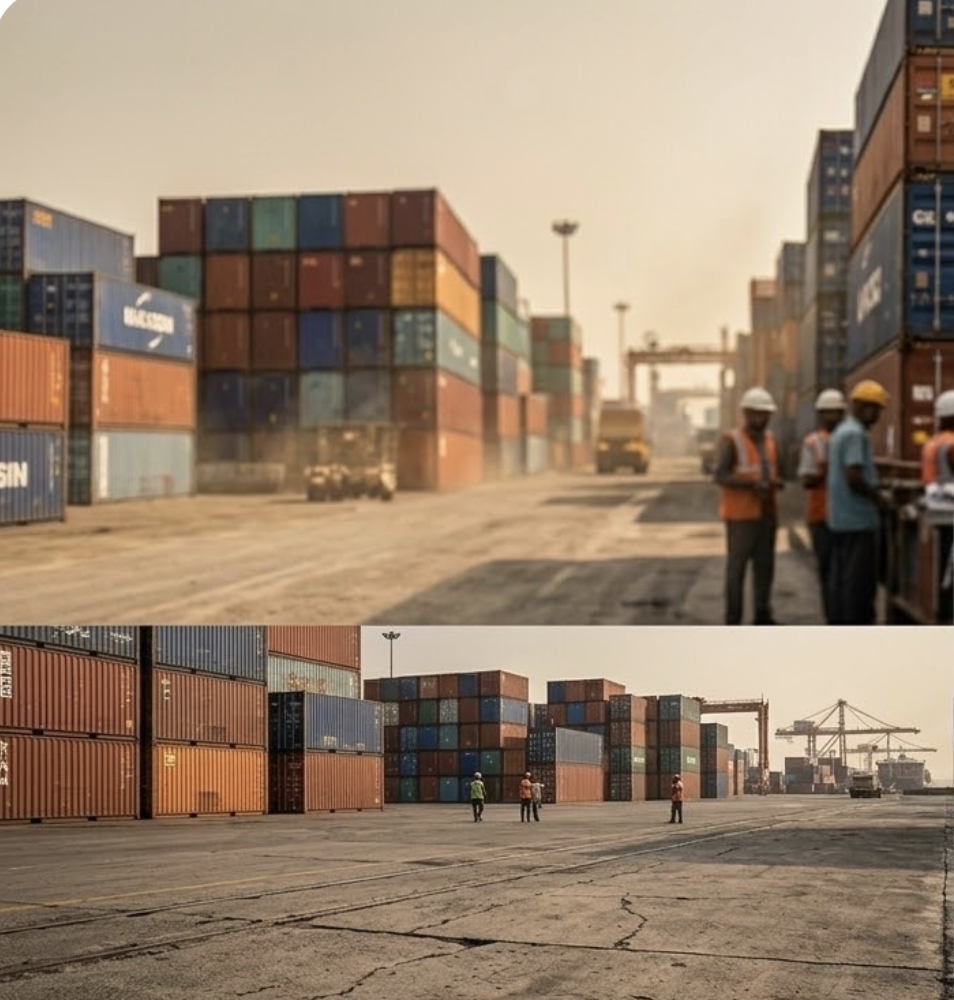
In a significant move to protect the liquidity of Indian traders, the Central Board of Indirect Taxes and Customs (CBIC) has just activated a 15-day emergency relief window. For the first time in recent history, ships that were forced to turn back due to the closure of maritime routes are being allowed to offload their cargo without the usual mountain of “import” paperwork. Previously, a ship returning to an Indian port with its own exports would face a bureaucratic nightmare, often treated as if it were “importing” the goods back into the country.
Under this new circular, vessels can berth and offload containers immediately at their port of departure, provided they haven’t touched a foreign port. Customs will prioritize seal integrity and shipping bill matches to move goods back to exporters quickly, while the government is manually recovering export benefits—like IGST and duty drawbacks—for shipments that never reached their destination. This intervention is a vital lifeline for exporters of perishable goods and high-value commodities who now face “cargo stranded at sea” scenarios.
The stakes couldn’t be higher for India’s energy sector. Over 85% of India’s crude oil is imported, with a massive portion traditionally transiting the Strait of Hormuz. The current disruption has already sent Brent crude prices climbing, sparking fears of a renewed inflationary cycle. For the average Indian, this isn’t just about the price at the petrol pump; higher fuel costs drive up “last-mile” delivery prices for everything from essential medicines to daily groceries. While India’s Strategic Petroleum Reserves—capable of meeting over 70 days of demand—offer a temporary buffer, a prolonged blockade would test the limits of India’s ability to pivot toward alternative suppliers.
The conflict is also hitting India’s export-oriented sectors where it hurts most. West Asia is a primary market for Indian agricultural staples like Basmati rice and tea, as well as engineering and construction materials. Shipping lines have begun rerouting vessels around the Cape of Good Hope, which adds nearly 20 to 25 days to transit times and dramatically increases freight costs and insurance premiums. There is growing concern that these added costs will make Indian goods more expensive on the global stage, allowing competitors to gain ground in key markets.
Beyond the balance sheets lies the human element. Millions of Indian workers reside in the Gulf, contributing billions in remittances that support families across Kerala, Bihar, and Uttar Pradesh. Any sustained instability doesn’t just threaten their safety; it threatens the financial stability of the millions of households that depend on those monthly transfers.
India’s economic fundamentals remain strong, supported by record foreign exchange reserves and a government that has shown it can move quickly to adjust trade policy. However, the mood in the industry remains one of cautious observation. The next two weeks will be critical as the 15-day Customs relief window plays out. Whether this remains a temporary logistical hiccup or evolves into a long-term economic restructuring depends entirely on the diplomatic efforts to reopen the heart of global trade.