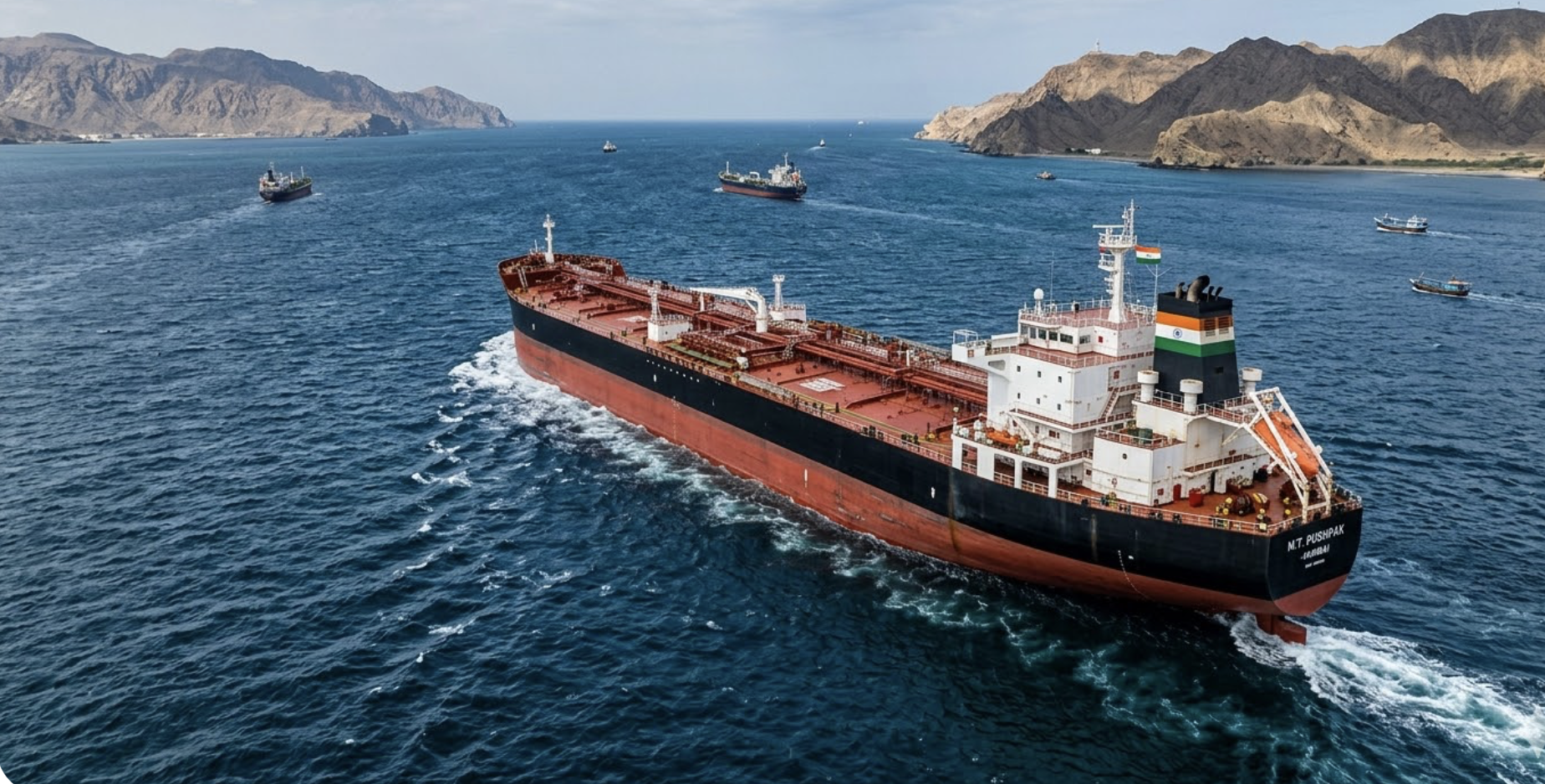
The maritime corridor of the Strait of Hormuz, often described as the world’s most volatile energy artery, has become the stage for a high-stakes game of geopolitical chess. Amidst the smoke of an escalating military confrontation between Iran and the United States, a rare glimmer of successful navigation emerged this week. Two Indian-flagged commercial vessels managed to safely transit the narrow waterway between Wednesday night and Thursday morning, marking a significant moment of relief for New Delhi as global shipping traffic otherwise remains paralyzed.
This successful passage did not happen in a vacuum. It follows a period of intense diplomatic maneuvering, highlighted by a critical phone conversation on Tuesday between Indian External Affairs Minister S. Jaishankar and Iranian Foreign Minister Seyed Abbas Araghchi. While the broader international community watches the region with bated breath, India’s direct engagement with Tehran appears to be aimed at ensuring its energy security remains insulated from the crossfire. This diplomatic outreach is particularly vital given that the conflict, which ignited on February 28, has turned the strait into a virtual no-go zone for many Western-linked carriers.
The tension in the region was further punctuated by the arrival of a Liberian-flagged tanker at Mumbai port on Wednesday. Commanded by an Indian captain and carrying Saudi Arabian crude oil, this vessel became the first ship bound for India to run the gauntlet since maritime traffic slowed to a crawl following U.S. and Israeli strikes on Iranian territory. Its safe docking in Maharashtra serves as a testament to the calculated risks currently being taken by mariners navigating these waters.
However, the reality on the water remains grim for those caught on the wrong side of the divide. For nearly a fortnight, Iran has asserted rigorous control over the channel, a move directly challenged by Washington. This power struggle has turned the strait—a chokepoint through which 20 million barrels of oil, or one-fifth of global daily consumption, flows—into a high-alert zone. The consequences of the friction are visible; several shipping companies have already rerouted their fleets, fearing they will become collateral damage in the ongoing retaliatory strikes.
The risks were underscored by a stern warning from a senior Iranian commander, who noted that any vessel attempting to pass without explicit clearance risks interception. To prove the point, Iranian authorities referenced the Express Rome and the Mayuree Naree, two ships that allegedly ignored local advisories and were subsequently targeted. The danger isn’t just theoretical; reports emerged Wednesday of two foreign tankers carrying Iraqi fuel oil being struck by explosive-laden boats in Iraqi waters. The resulting fires and the suspected Iranian origin of the attack boats have only added fuel to an already combustible situation.
As the world watches the ripple effects on global oil prices and supply chains, the successful transit of the Indian ships offers a localized success story in an otherwise darkening landscape. It highlights a delicate balancing act: while the Strait of Hormuz remains the center of a military storm, functional neutrality and high-level communication are currently the only tools keeping the lights on and the fuel flowing for nations caught in the middle.