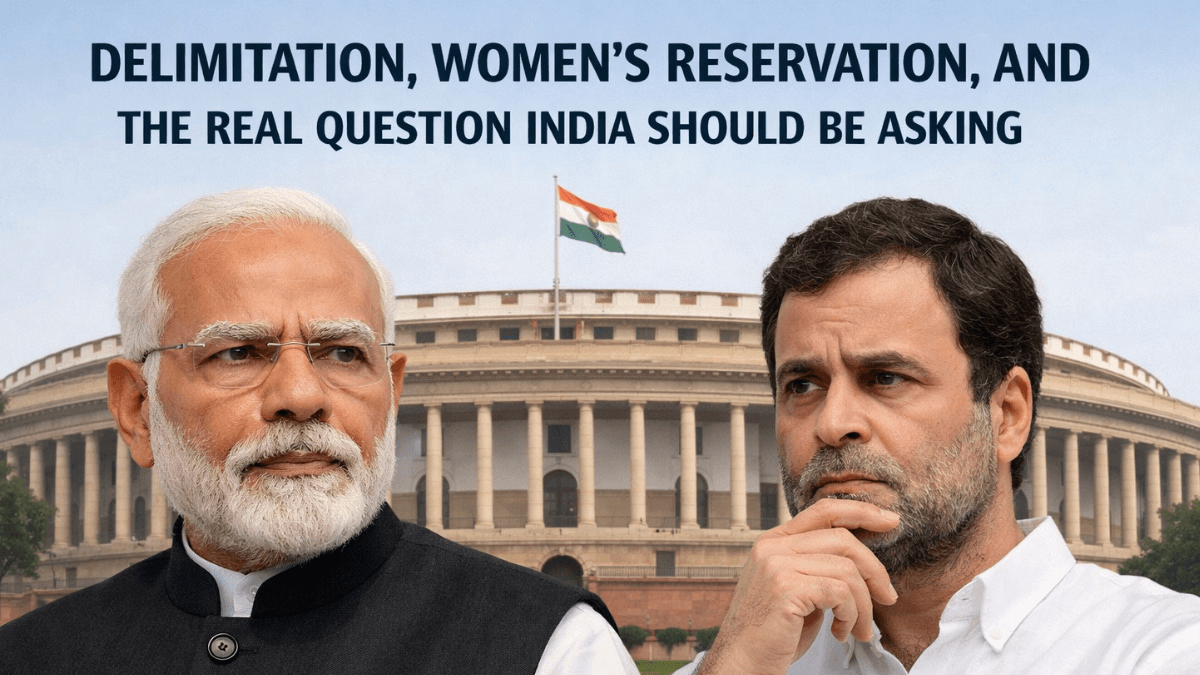
The Delimitation debate is rapidly being framed in ways that suit political narratives. Some want to turn it into a South vs North battle. Others present it as a historic moment for women’s representation. But beneath the headlines lies a simpler question:
Will this reform improve the lives of ordinary Indians — or mainly strengthen the political class?
This discussion should not be reduced to regional fault lines. Nor should genuine causes like women’s representation be used as political packaging. The real issue is governance, accountability, and whether expanding Parliament solves the problems citizens actually face every day.
More Seats, More Politicians, More Cost
India already has 543 Lok Sabha MPs and 245 Rajya Sabha members at maximum strength. Yet millions still struggle with poor schools, understaffed hospitals, broken roads, unemployment, delayed justice, and weak local administration.
So the natural question is:
Does India suffer from too few politicians — or too little delivery from the ones already elected?
Increasing seats means more salaries, more allowances, more staff, more security, more office infrastructure, more official residences, more vehicles, and more long-term public expenditure funded by taxpayers.
Before adding more representatives, citizens have every right to ask:
- What measurable outcomes have current MPs delivered?
- How many actively engage in Parliament beyond party instructions?
- How many solve constituency issues consistently?
- How many improve education, healthcare, jobs, or infrastructure?
- How many remain accessible after elections?
Representation matters. But representation without accountability becomes expensive symbolism.
Women’s Reservation: Valid Cause, Wrong Packaging
Women’s political representation is necessary. India needs more women lawmakers, ministers, administrators, and decision-makers. That is not in dispute.
But another fair question must be asked:
Why is women’s reservation being tied to delimitation and seat expansion?
If the intent is genuine empowerment, why can’t stronger women’s representation begin within the current structure?
Political parties today can already:
- Field more women candidates
- Reserve internal leadership roles
- Invest in women campaigners
- Promote capable women leaders
- Build long-term political pipelines
Nothing prevents parties from doing this now except political will.
When reservation is linked to seat expansion, a legitimate reform risks becoming a shield for a separate political objective.
Women deserve representation because it is right — not because it helps sell another policy.
The Real Deficit Is Governance
India’s core shortage is not MPs.
It is:
- Quality schools
- Teachers
- Doctors
- Hospitals
- Jobs
- Efficient policing
- Clean administration
- Faster courts
- Urban planning
- Rural development
- Accountability in public spending
Citizens do not wake up each morning worrying there are too few parliamentarians. They worry about inflation, employment, traffic, healthcare bills, education costs, corruption, and safety.
If governance remains weak, adding more MPs changes little.
The Vote-Buying Reality
Many citizens know the ground reality of elections: money power, freebies, identity mobilisation, short-term handouts, and cash-for-vote practices in some regions.
In such an environment, increasing seats without deep electoral reform may simply create more positions to be captured by money, dynasty networks, and patronage politics.
That is not democratic deepening. That is political multiplication.
Reform the System Before Expanding It
If India truly wants stronger democracy, priorities should include:
- Transparency in political funding
- Internal democracy in parties
- Candidate quality standards
- Stronger anti-corruption enforcement
- Performance dashboards for MPs
- Attendance and debate accountability
- Faster constituency grievance systems
- Electoral spending scrutiny
Fixing incentives matters more than increasing headcount.
Final Thought
Delimitation may be constitutionally necessary at some stage. Women’s representation is unquestionably important. But both should be discussed honestly, not marketed emotionally.
India does not suffer from a shortage of politicians.
India suffers from a shortage of governance.
Until that changes, more seats may only mean more power for politicians — not more progress for citizens.