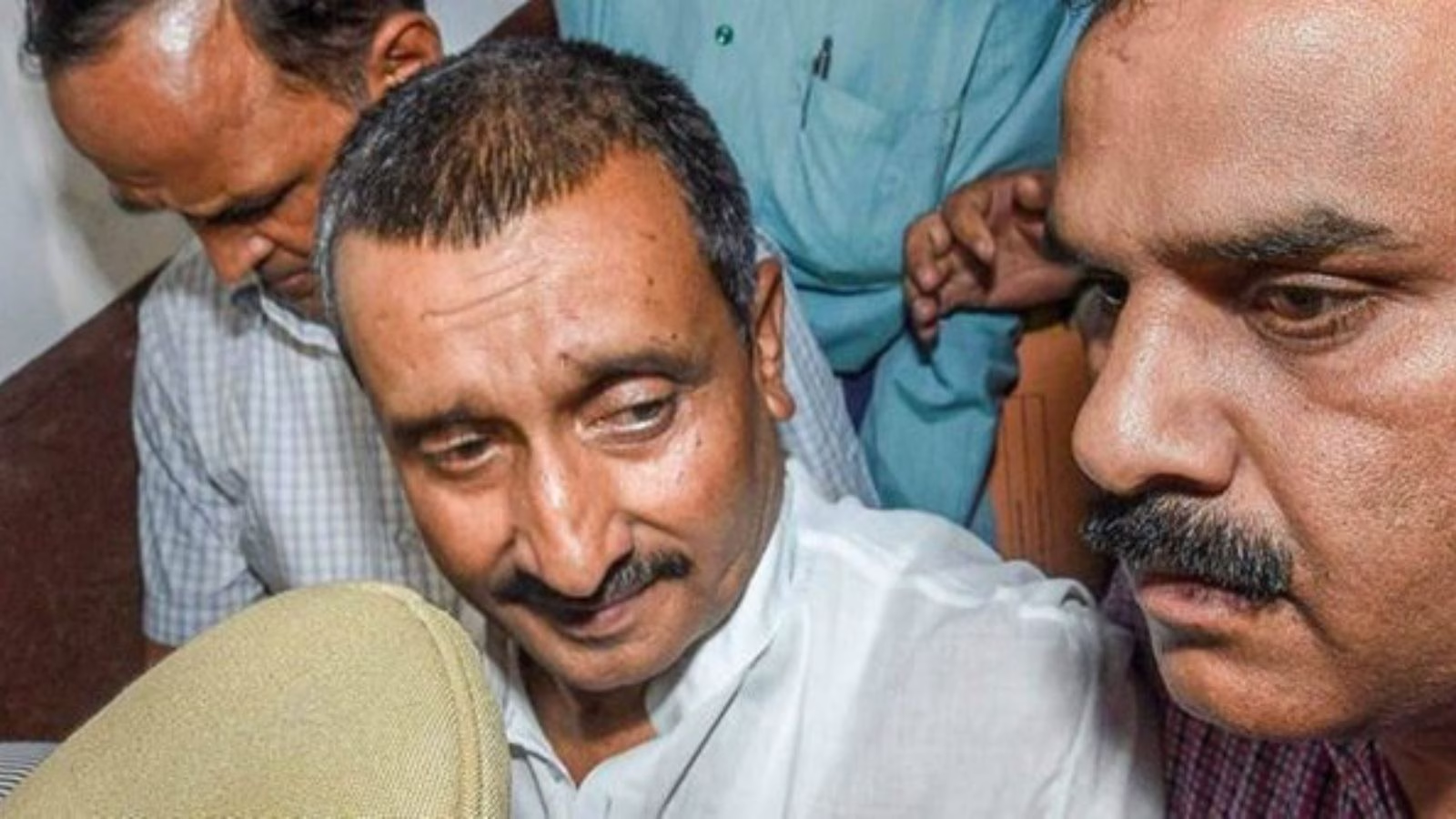
In a significant move to uphold victims’ rights, the Supreme Court of India on Monday officially allowed the Unnao rape survivor to participate in the ongoing legal battle over the bail granted to former MLA Kuldeep Singh Sengar. This decision ensures that the survivor will have a formal voice in the proceedings as the Central Bureau of Investigation (CBI) challenges the suspension of Sengar’s life sentence.
A bench comprising Chief Justice Surya Kant and Justice Joymalya Bagchi accepted the survivor’s request for impleadment. The court noted that a survivor has a legitimate right to be heard in matters that directly affect the pursuit of justice and their own safety. The CBI’s petition is specifically targeting a Delhi High Court order from late 2025 that had granted bail to Sengar, the primary convict in the 2017 rape of a minor.
While the survivor was granted entry into the case, the bench declined a separate request from her minor cousin. The cousin had sought to join the plea citing personal security concerns, but the court directed him to seek independent legal remedies, such as approaching a High Court for protection, rather than intervening in the CBI’s specific appeal against the bail.
The core of this legal dispute revolves around a technical interpretation of the Protection of Children from Sexual Offences (POCSO) Act. When the Delhi High Court granted Sengar bail in December 2025, it argued that Sengar—despite being an MLA at the time of the crime—might not technically fall under the definition of a “public servant” as outlined in the Indian Penal Code (IPC).
Under Section 5(c) of the POCSO Act, if a “public servant” commits sexual assault against a child, it is categorized as an aggravated offence, carrying a much harsher sentence of 20 years to life. The CBI has contested this, arguing that the status of an MLA carries a unique public trust that should imply heightened responsibility. They maintain that POCSO is a victim-centric law that should be interpreted to protect the child, not provide technical loopholes for those in power.
The Supreme Court had already stayed Sengar’s bail in December 2025, ensuring he remained behind bars while these substantial questions of law were examined. Sengar is also serving a separate 10-year sentence related to the custodial death of the survivor’s father. The hearing was briefly adjourned on Monday as Solicitor General Tushar Mehta was unavailable, but the bench indicated that it would fix a date for a final hearing soon to resolve whether an elected representative can be shielded from aggravated charges simply due to a definitional technicality.