In a significant move that highlights the ongoing volatility of the global energy market, India’s oil marketing companies (OMCs) have announced a sharp upward revision in the prices of commercial LPG cylinders and aviation turbine fuel (ATF). Effective Wednesday, April 1, 2026, businesses and international travelers will bear the brunt of these costs, though the government has intervened with a strategic “safety net” for domestic flyers.
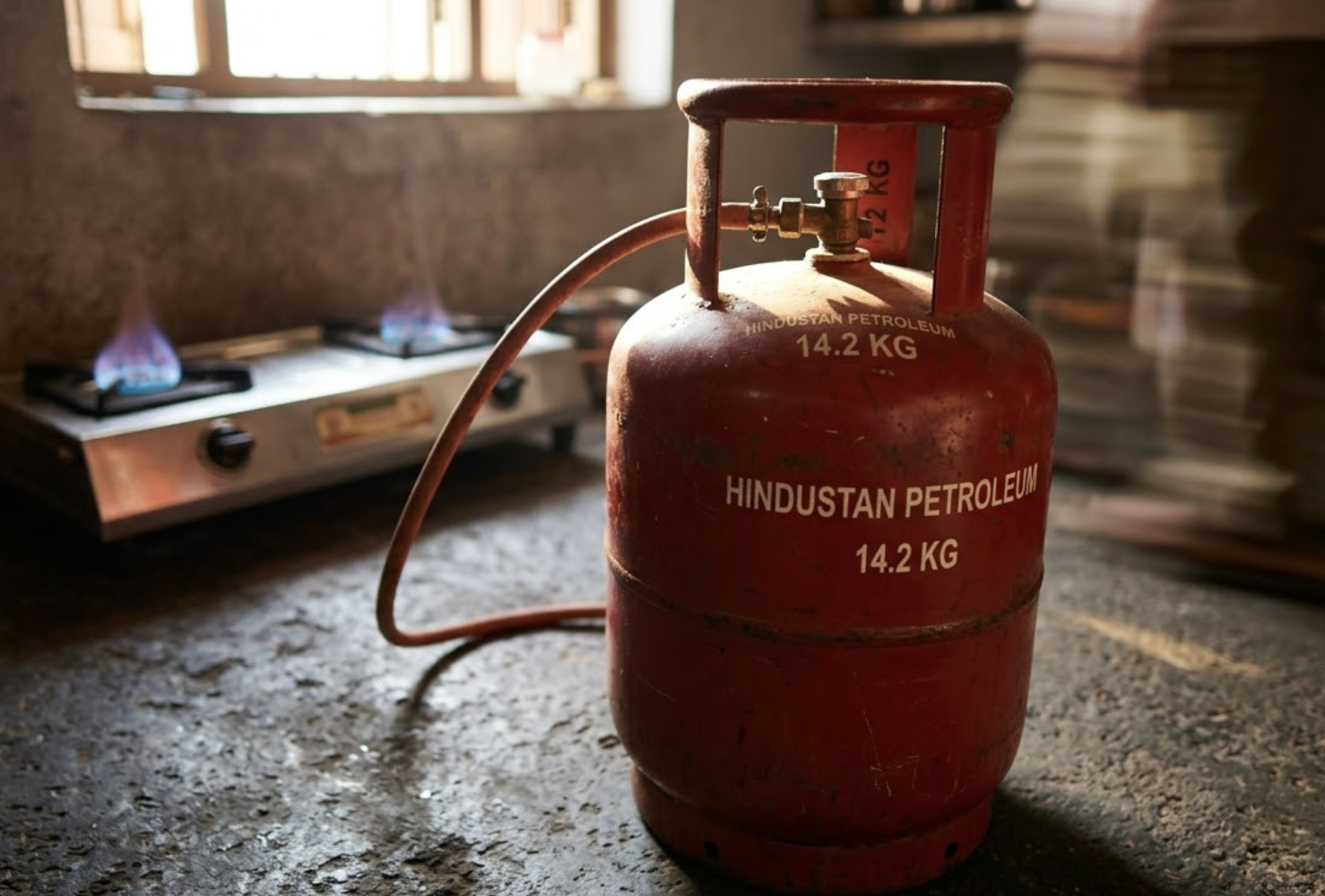
The price of a 19-kg commercial LPG cylinder has jumped by more than 10% across major metropolitan areas. In the capital, the cost has surged to ₹2,078.50, up from the previous month’s rate of ₹1,883. The impact is felt even more acutely in other cities: Mumbai saw an increase of ₹196 per cylinder, while Kolkata and Chennai experienced hikes of ₹218 and ₹203, respectively. This change is expected to ripple through the hospitality sector, affecting the operational costs of hotels, restaurants, and small eateries. Crucially, the government has kept prices for domestic 14.2 kg LPG cylinders unchanged, shielding household budgets from the current spike.
The aviation sector is facing a similarly complex landscape. On the international front, fuel costs have effectively doubled, reaching a record high of ₹2.07 lakh per kilolitre. However, to prevent a domestic travel crisis, the Ministry of Petroleum and the Ministry of Civil Aviation have collaborated to cap the hike for domestic routes at just 25%. Under this arrangement, domestic airlines will pay approximately ₹1,04,927 per kilolitre in Delhi—a figure significantly lower than the market rate.
Without this intervention, the price hike would have exceeded ₹60,000 per kilolitre. Instead, airlines are only being asked to absorb a ₹15,000 per kilolitre increase. Civil Aviation Minister Ram Mohan Naidu characterized this as a “calibrated approach” designed to stabilize the aviation sector and protect passengers from exorbitant fare jumps. Despite this, major players like IndiGo have indicated that revised fuel surcharges are likely on the horizon.
Behind these price adjustments lies a deepening financial strain on state-run oil companies like IOC, BPCL, and HPCL. Currently, OMCs are reporting a massive “under-recovery” of approximately ₹380 for every cylinder sold. The gap between international procurement costs and domestic selling prices has become a chasm; estimates suggest these companies are losing roughly ₹24 per litre on petrol and over ₹100 per litre on diesel.
The root of the problem is global. Benchmark Saudi Contract prices for LPG have soared by 44% in just one month, exacerbated by supply chain bottlenecks in the Strait of Hormuz. While the government has provided some relief by slashing the Special Additional Excise Duty (SAED) by ₹10 per litre, the sheer scale of global price shocks continues to test the limits of India’s energy policy.
As of now, the strategy remains a delicate balancing act: allowing market-linked prices to rise for commercial and premium sectors while subsidizing and capping costs for the general public and essential domestic connectivity.