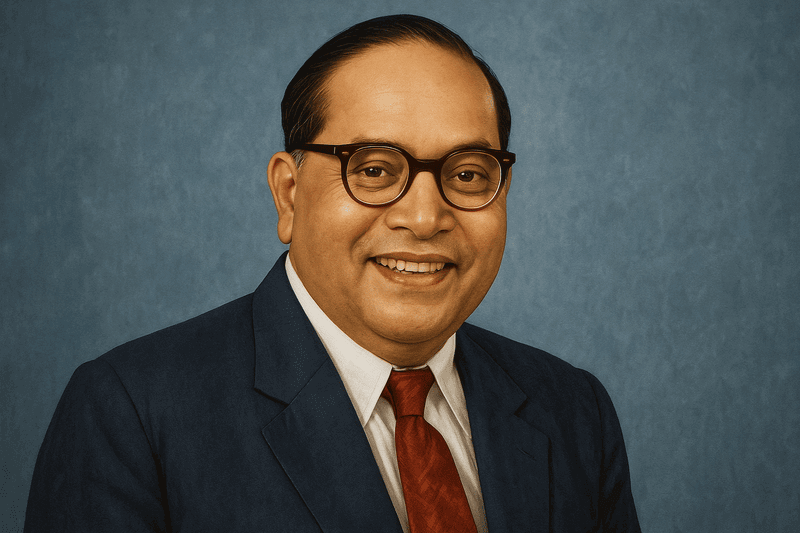
India lost one of its greatest minds on December 6, 1956, when Dr. Bhimrao Ramji Ambedkar passed away. Yet decades later, our understanding of this extraordinary man remains tragically incomplete. Political opportunism has reduced the architect of modern India to a symbol of caste politics, while his profound contributions to nation-building gather dust in the shadows of divisive rhetoric.
It is time we reclaim Dr. Ambedkar from the narrow confines of community ownership and recognize him for what he truly was: a visionary whose ideas continue to shape the India we live in today.
The Architect of India’s Constitution
Before we discuss reservations, let us remember that Dr. Ambedkar was the principal architect of the Indian Constitution. As Chairman of the Drafting Committee, he didn’t just compile legal provisions—he crafted the soul of democratic India. The Constitution he helped create established fundamental rights, directive principles, and the federal structure that continues to govern our nation.
His legal brilliance shines through every article that protects individual liberty, ensures gender equality, and establishes the rule of law. When we enjoy freedom of speech, when women participate in governance, when our courts uphold justice—we are experiencing Ambedkar’s vision in action.
Revolutionary Contributions to Women’s Rights
Dr. Ambedkar was perhaps India’s greatest champion of women’s rights in the early 20th century. Through the Constitution, he ensured universal adult suffrage, giving women equal voting rights from day one of independence—a radical step when many democracies still denied women this basic right.
Article 15 of the Constitution, which prohibits discrimination based on sex, bears his intellectual fingerprint. Article 16ensures equal opportunity in public employment regardless of gender. These weren’t just legal provisions—they were revolutionary concepts that challenged centuries of patriarchal tradition.
His most controversial yet progressive work was the Hindu Code Bill, which he drafted as Law Minister. Though it faced massive opposition and was passed in parts only after his resignation, this legislation transformed women’s lives by:
- Granting women equal inheritance rights
- Legalizing divorce and giving women the right to remarry
- Establishing monogamy as the legal norm
- Providing property rights to wives and daughters
- Setting minimum age for marriage
When orthodox forces opposed these reforms, Ambedkar famously declared: “I measure the progress of a community by the degree of progress which women have achieved.” His vision of gender equality was decades ahead of his time.
Constitutional Provisions That Transformed India
Beyond women’s rights, Dr. Ambedkar embedded numerous progressive principles in the Constitution that continue to benefit all Indians:
Fundamental Rights: He ensured that rights to equality, freedom, and life were not mere aspirations but justiciable rights that courts could enforce. Every time a citizen approaches the Supreme Court for justice, they invoke Ambedkar’s constitutional framework.
Directive Principles: These non-justiciable but morally binding principles guide government policy toward social justice, economic equality, and welfare state ideals. From free education to living wages, these principles reflect his comprehensive vision of social democracy.
Independent Judiciary: The constitutional provision for an independent judiciary, with powers of judicial review, ensures that the Constitution remains a living document protecting citizens’ rights against legislative and executive overreach.
Federal Structure: His careful balance between central authority and state autonomy has kept India united while respecting diversity—a remarkable achievement for a nation of India’s complexity.
Protection of Minorities: The constitutional safeguards for religious and linguistic minorities reflect his understanding that democracy must protect the vulnerable from the tyranny of the majority.
Economic Visionary and Social Reformer
Dr. Ambedkar’s doctoral thesis from Columbia University, “The Evolution of Provincial Finance in British India,” demonstrated his deep understanding of economics and public finance. His insights into banking, currency, and fiscal policy influenced India’s early economic policies. He advocated for industrialization, warned against excessive dependence on agriculture, and promoted cooperative farming decades before these became mainstream economic thought.
As India’s first Law Minister, he established the foundation for modern Indian jurisprudence. His work on the Hindu Code Bill, though controversial then, laid the groundwork for women’s rights in marriage, divorce, and inheritance—reforms that transformed Indian society.
The Scholar and Intellectual Giant
Armed with degrees from Columbia University and the London School of Economics, Dr. Ambedkar was among the most educated Indians of his time. He was fluent in multiple languages, wrote extensively on economics, sociology, and religion, and engaged with global intellectual discourse. His book “The Annihilation of Caste” remains one of the most powerful critiques of social hierarchy ever written.
This was not just a caste leader speaking to his community—this was a world-class intellectual offering solutions for humanity’s oldest social problems.
Champion of Human Rights and Social Justice
Long before the United Nations Declaration of Human Rights, Dr. Ambedkar was articulating principles of human dignity and equality. His fight wasn’t just for Dalits—it was for a society where birth wouldn’t determine destiny, where merit would triumph over privilege, and where every individual could realize their potential.
His advocacy for labor rights, women’s empowerment, and educational access benefited all of Indian society. The reservation system, often seen as his primary legacy, was actually just one tool in his comprehensive vision for social transformation.
Standing on the Shoulders of Giants
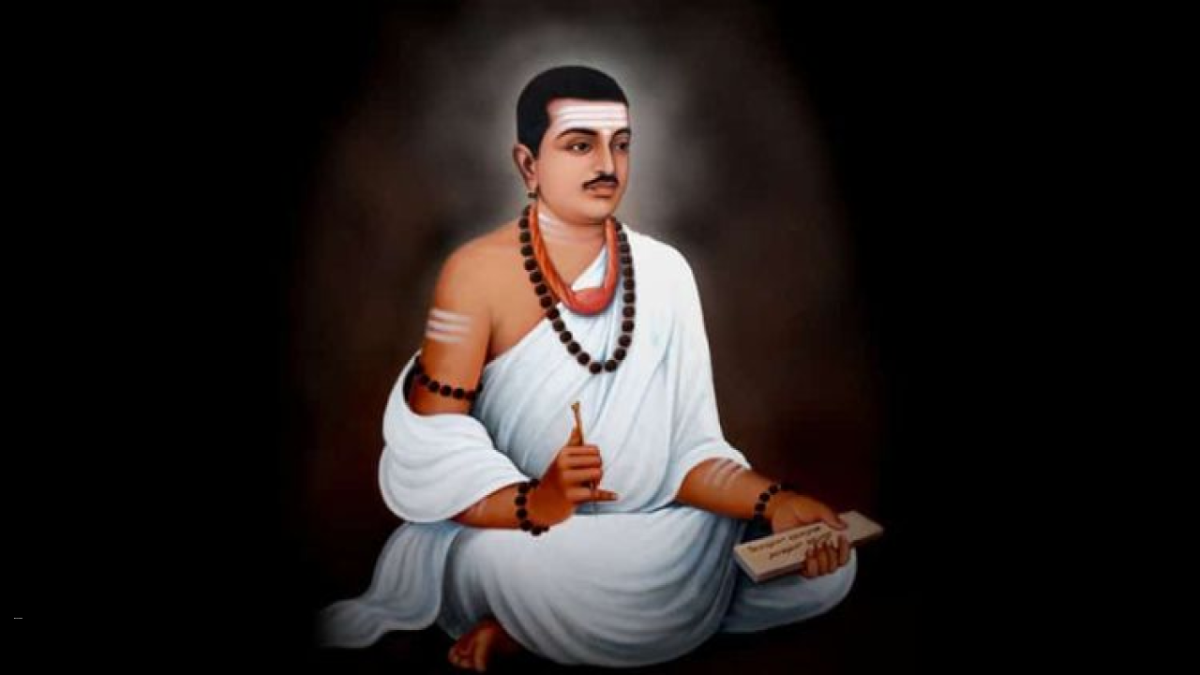
Dr. Ambedkar was acutely aware that he was not alone in his struggle for social justice. He deeply respected and drew inspiration from earlier social reformers who had challenged orthodox thinking and fought for human dignity. He held immense admiration for Basavanna, the 12th-century social revolutionary who established the Lingayat movement in Karnataka. Basavanna’s rejection of caste hierarchy, advocacy for gender equality, and emphasis on social service resonated deeply with Ambedkar’s own philosophy.
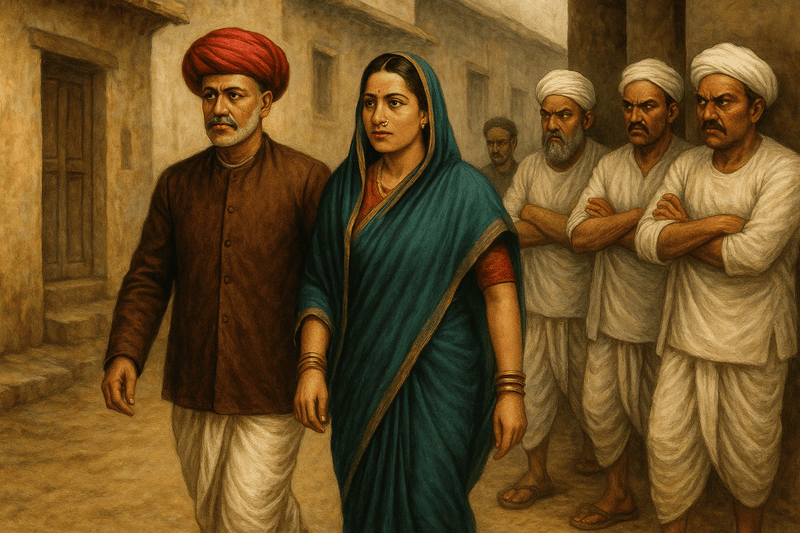
He also acknowledged the contributions of Jyotirao Phule, who pioneered education for women and lower castes in Maharashtra, and Savitribai Phule, India’s first female teacher who broke gender barriers. Ambedkar recognized how Phule’s concept of the “Shudra-Atishudra” struggle laid the intellectual groundwork for his own movement.
Dr. Ambedkar engaged intellectually with contemporary thinkers like M.N. Roy, the radical humanist philosopher. While they disagreed on methods and ideology, Ambedkar respected Roy’s commitment to rationalism and social transformation. He understood that social change required diverse voices and approaches.
This recognition of India’s rich tradition of social reform is crucial. Ambedkar was not an isolated figure but part of a continuous stream of reformers who challenged injustice across centuries—from ancient Buddhist philosophers to medieval saints like Kabir, Ravidas, and Tukaram, to modern reformers like Raja Ram Mohan Roy, Ishwar Chandra Vidyasagar, and Periyar E.V. Ramasamy.
What made Ambedkar unique was his ability to synthesize this reformist tradition with modern constitutional democracy, creating a framework that could institutionalize social change rather than merely inspiring it.
The Tragedy of Misrepresentation
Today, we witness a tragic irony. Politicians invoke Ambedkar’s name while perpetuating the very divisions he sought to eliminate. Statues worth hundreds of crores rise from the ground while the educational institutions he championed remain underfunded. Communities claim ownership of his legacy while ignoring his message of universal human dignity.
This selective appropriation does disservice to both Ambedkar’s memory and India’s progress. When we reduce him to a caste icon, we lose the universality of his message. When we build monuments instead of minds, we betray his fundamental belief in education as liberation.
A Call for True Homage
If we truly wish to honor Dr. Ambedkar, we must embrace his complete vision:
Invest in Education, Not Statues: Every rupee spent on a statue could fund a scholarship, build a library, or train a teacher. Ambedkar believed education was the key to social transformation. Let us honor him by making quality education accessible to every child, regardless of their background.
Rise Above Caste Politics: Ambedkar’s ultimate goal was the annihilation of caste. When we perpetuate caste-based thinking—whether in worship or hatred—we move away from his vision. Let us judge people by their character and contributions, not their birth.
Embrace Universal Values: His fight for justice, equality, and human dignity transcends any single community. These are values every Indian should cherish and protect.
Focus on Substance Over Symbolism: Building statues is easy; building minds is hard. Let us channel our resources and energy into creating the educated, just, and prosperous society he envisioned.
The Way Forward
India needs to rediscover Dr. Ambedkar as a national treasure, not a community possession. His ideas on democracy, justice, education, and social reform are as relevant today as they were seven decades ago. In an era of growing inequality and social tension, his vision of a casteless, classless society offers hope and direction.
Let us stop asking whether someone is “for” or “against” Ambedkar based on their caste or political affiliation. Instead, let us ask whether they embrace his values of education, equality, and human dignity. Let us measure our progress not by the number of statues we erect, but by the number of minds we liberate from ignorance and prejudice.
Dr. B.R. Ambedkar belongs to every Indian who believes in justice, equality, and human dignity. He belongs to every child who dreams of education, every woman who fights for her rights, and every citizen who stands up against oppression.
It’s time we stopped fighting over his legacy and started living it.
The greatest tribute to Dr. Ambedkar would be an India where his vision of social justice becomes reality—where every child has access to quality education, where merit triumphs over birth, and where the Constitution he helped craft truly becomes the lived experience of every citizen.
Let us honor the man who gave us our Constitution by building the nation he envisioned: educated, enlightened, and equal.