Maharashtra: Amid growing public and political outrage, the Maharashtra government has withdrawn two controversial Government Resolutions (GRs) that proposed the compulsory introduction of Hindi as a third language in English and Marathi medium schools from Classes 1 to 5. The decision, taken at a cabinet meeting on Sunday, is seen as a direct response to the intense criticism over what many perceived as an attempt to impose Hindi on non-Hindi-speaking students in the state.
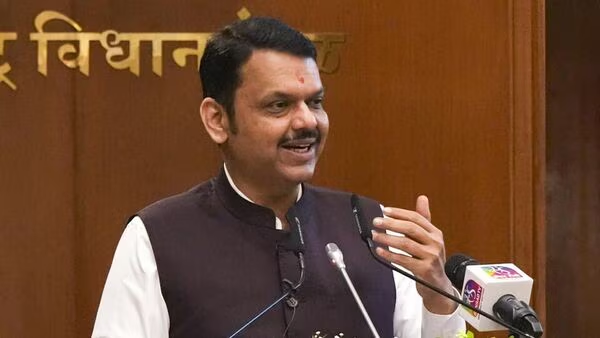
Chief Minister Devendra Fadnavis, while addressing the media in Mumbai, confirmed the rollback of the language policy and announced the formation of a new expert committee to re-examine the framework. The panel, to be headed by renowned educationist Dr Narendra Jadhav, will review the existing language structure and recommend a revised and more inclusive plan for the future. The committee is also expected to oversee the smooth and sensitive implementation of any updated policy that balances regional identity with national integration.
Fadnavis defended the move by tracing its origins to the earlier government under Uddhav Thackeray. He stated that it was the Thackeray-led administration that had initially accepted the recommendations of the Dr Raghunath Mashelkar committee, which proposed the adoption of a three-language formula from Class 1 to 12. A panel was also formed back then to facilitate its rollout, according to Fadnavis.
The initial resolution, issued on April 16, made Hindi compulsory for students up to Class 5. However, widespread opposition from civil society groups, regional parties, and educational experts forced the government to amend the policy. On June 17, a revised GR was issued that made Hindi optional, though it still retained its suggested presence as the third language. This partial change failed to address concerns fully, particularly from those who viewed the policy as diluting the importance of Marathi in schools and adding unnecessary pressure on young learners.
The political heat around the issue intensified when Shiv Sena (UBT), led by former Chief Minister Uddhav Thackeray, launched statewide protests. Demonstrators took to the streets in Mumbai and across Maharashtra, burning copies of the June 17 GR to signal their strong disapproval. Thackeray, while making it clear that he holds no opposition to the Hindi language itself, firmly rejected its imposition on students. “We don’t oppose Hindi, but we cannot accept its forced inclusion in our school system. This is not about language alone—it’s about respecting regional identity and reducing the burden on children,” he said.
He also questioned the government’s awareness of the public sentiment behind the agitation and highlighted the perceived injustice to the Marathi language. According to Thackeray, language policies should support regional pride while promoting linguistic diversity, not suppress one in favor of another.
The latest cabinet decision marks a pause in what was becoming an increasingly polarizing issue. By stepping back and bringing in educational experts, the government appears to be aiming for a more measured and consultative approach. The newly-formed Dr Jadhav committee is expected to engage with stakeholders, including educators, linguists, parents, and student bodies, before recommending a balanced language policy.
In a culturally and linguistically diverse state like Maharashtra, language education remains a sensitive and deeply emotional subject. The coming months will be crucial as the government works to create a policy that maintains linguistic harmony, protects Marathi pride, and ensures students aren’t overburdened.