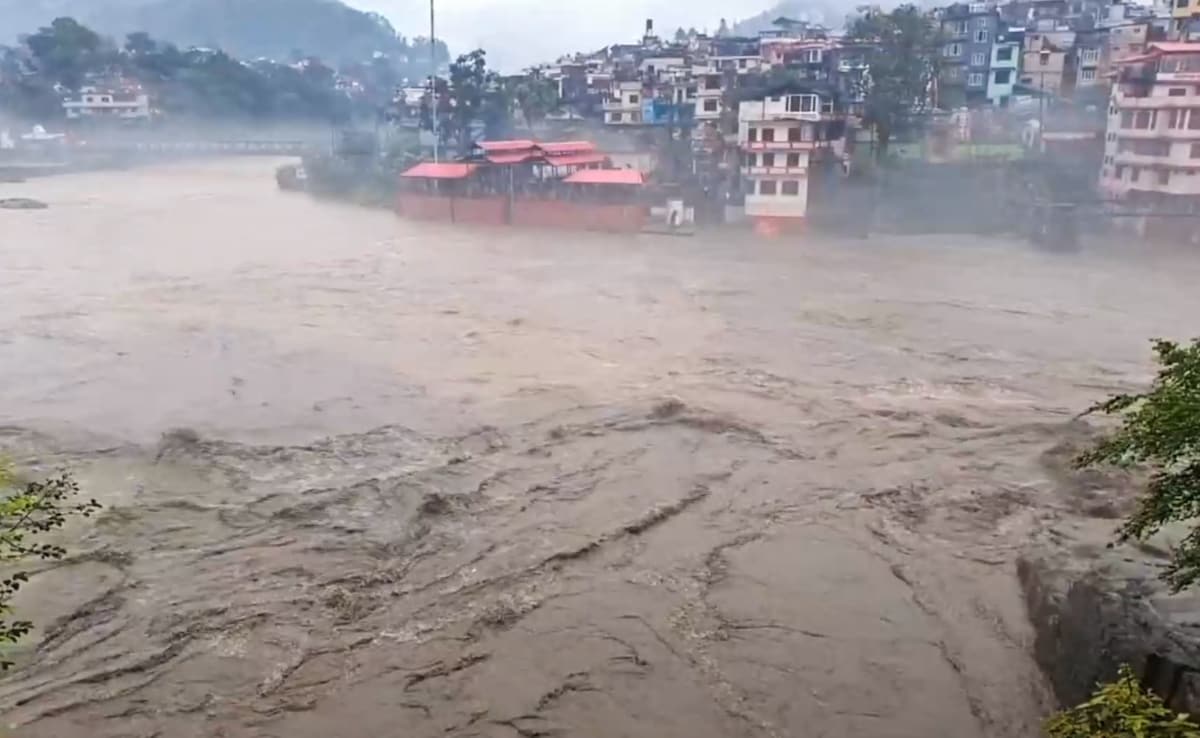
Himachal Pradesh continues to reel under the impact of devastating monsoon rains that have left a deep scar across the state. Since the onset of the monsoon on June 20, extreme weather events like cloudbursts, flash floods, and massive landslides have claimed at least 69 lives, with 37 people still missing. Over 110 have been reported injured, and the damage continues to grow every passing day. What started as continuous rainfall has now turned into a full-blown crisis, especially in Mandi district, which has emerged as the worst-hit region. The areas of Thunag and Bagsayed, both under the constituency of former Chief Minister Jairam Thakur, have witnessed complete destruction. In addition to these, Karsog, Dharampur, Gohar, and Ropa Valley have also faced large-scale damage. Rescue teams have been deployed in difficult terrains, but the loss is far from being contained.
At least 14 separate cloudburst incidents have been reported in the state so far. Mandi district alone accounts for over a dozen fatalities and 40 missing persons. Villages like Piyala and Bharad have seen houses buried under debris, with 65 people rescued just in time. A horticulture college in Thunag, with 92 students and faculty stranded, had to be evacuated after repeated cloudbursts damaged the approach roads and cut off communication. The Indian Army, Air Force, and the National Disaster Response Force have been carrying out relentless rescue missions. Helicopters were used to airdrop food and essentials to isolated hamlets, while drone surveillance has been deployed to locate people trapped under debris.
The overall infrastructure damage is massive. More than 500 roads across the state are blocked, with 186 closures reported in Mandi alone. Electricity supply remains disrupted in large parts as over 500 transformers have gone out of service. Nearly 800 water supply schemes are non-functional, adding to the crisis. Fourteen bridges have been completely washed away, and more than 150 houses have been destroyed. Temporary shelters have been set up, but in many regions, even reaching these camps is a challenge due to road inaccessibility and ongoing landslides. The livestock sector too has taken a major hit, with nearly 300 animals, including 164 cattle, dead.
Chief Minister Sukhvinder Singh Sukhu has announced immediate financial aid of ₹5,000 per family to help with temporary renting arrangements. Cabinet ministers have been directed to monitor relief work in their respective areas, and all state machinery has been put on high alert. The Chief Minister also confirmed that around 402 people have been rescued so far from high-risk zones in Mandi. Additionally, food packets, drinking water, and medicine supplies are being mobilized to affected areas. The Chief Minister has requested more support from the central government as the scale of the damage exceeds initial estimates. Union Home Minister Amit Shah has spoken to the CMs of Himachal Pradesh, Gujarat, Rajasthan, Uttarakhand, and Chhattisgarh—states facing similar monsoon fury—and assured that more NDRF units will be deployed if required.
While the human toll is mounting, the financial impact is also beginning to emerge. Initial estimates suggest losses in the range of ₹700 crore, but the number is likely to rise. Damage to government buildings, rural roads, irrigation projects, and power infrastructure continues to be assessed. District administrations are under pressure to provide quick estimates for immediate rehabilitation planning. In the worst-affected pockets, locals say they have never witnessed this level of rainfall in decades, with many pointing to changing weather patterns and the frequency of cloudbursts as signs of a worsening climate scenario.
The India Meteorological Department has issued fresh red and orange alerts for heavy to very heavy rainfall till July 7 across various districts, including Kangra, Kullu, Solan, Shimla, Hamirpur, and Kinnaur. Authorities have urged residents living near riverbanks or on unstable slopes to evacuate immediately. Several schools remain closed as a precautionary measure. Meanwhile, mobile network providers have enabled intra-circle roaming until July 11 to help restore connectivity in blackout zones. Relief agencies have also been instructed to remain on standby beyond this week as the risk of fresh landslides and flooding remains high.
Even as rescue operations continue, the emotional toll is equally significant. Families have been separated, livelihoods destroyed, and entire villages flattened. The immediate priority remains saving lives, but the challenge of rebuilding Himachal after this catastrophic monsoon will be long and arduous. Many survivors are now living in makeshift tents, uncertain about their future. The administration is also working on plans to strengthen early warning systems and train local communities in emergency response measures to better deal with such disasters in the future.
The next few days are critical for the state, as further rainfall is likely to aggravate the situation. Relief teams are racing against time to clear blocked roads, restore electricity, and provide food and medical aid to stranded residents. With access routes cut off and communication still patchy in several hill pockets, the scale of the unfolding crisis may be even larger than currently known.