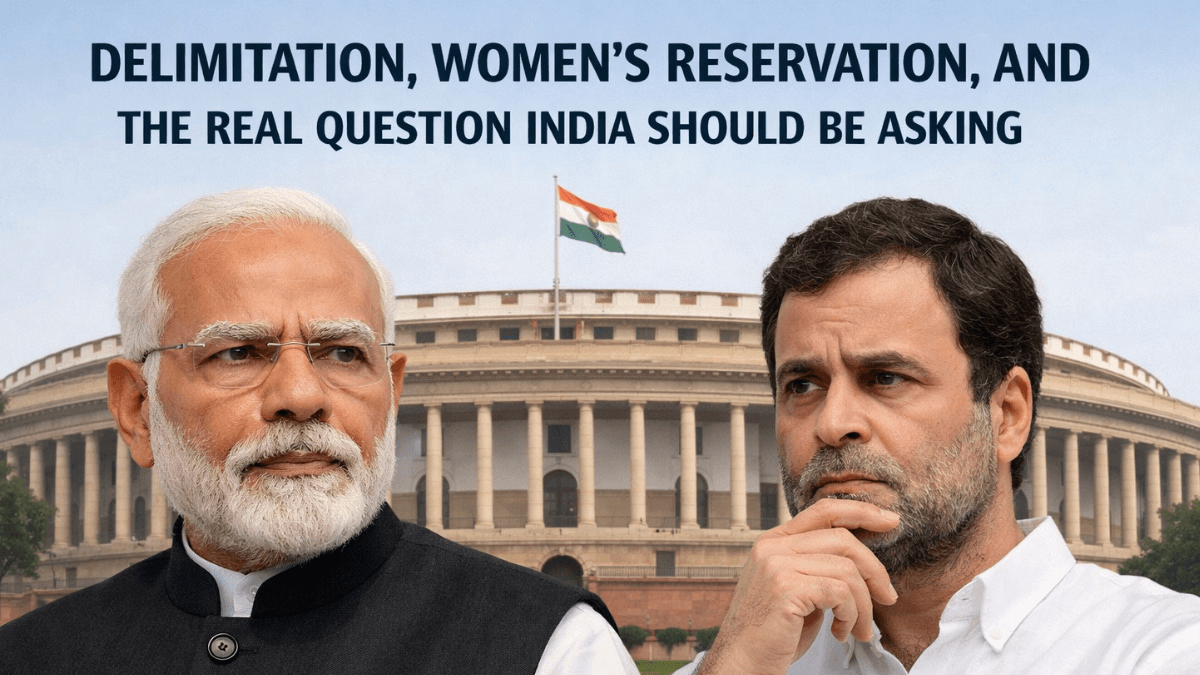

The Prime Minister’s recent address to the Knesset was intended as a landmark moment of solidarity, but back home, it has reignited a fierce debate over the soul of India’s foreign policy. While Narendra Modi used the historic platform to cement a “firm and lasting” bond with Israel, the Indian National Congress has been quick to push back, arguing that the speech effectively dismantled decades of carefully maintained moral neutrality in West Asia.
Speaking before the Israeli Parliament on Wednesday, PM Modi offered an unwavering endorsement of Israel’s security narrative. Referring to the Gaza Peace Initiative as a viable path forward, he centered his message on a total rejection of political violence. Recalling the trauma of the October 7 attacks, the Prime Minister framed India’s support not just as a diplomatic choice, but as a moral conviction, stating clearly that no cause could ever justify the targeting of civilians or the machinery of terror.
However, the opposition sees this not as a stance against terror, but as a partisan pivot. Congress General Secretary Jairam Ramesh led the critique, labeling the address an “unabashed defence” of Prime Minister Benjamin Netanyahu’s administration. For the Congress, the issue isn’t the condemnation of terrorism—which remains a bipartisan Indian standard—but the perceived abandonment of the “humanitarian balance” that once defined India’s voice on the global stage.
To drive this point home, the Congress pivoted to history. Ramesh highlighted a 1947 exchange between Jawaharlal Nehru and Albert Einstein to illustrate a different era of Indian diplomacy. In that correspondence, Nehru expressed deep empathy for the Jewish people’s aspirations while simultaneously acknowledging the displacement and grievances of the Arab population. It was this “dual empathy” that the Congress claims is missing from the current government’s rhetoric. Nehru’s original caution—that lasting peace cannot be imposed from above and requires winning the goodwill of all neighbors—serves as the benchmark by which the opposition is now judging the Prime Minister.
The internal political rift was further widened by the inclusion of international voices. The Congress pointed toward critiques from within Israel itself, specifically citing human rights lawyer Eitay Mack, to argue that the Prime Minister’s speech might have actually thinned India’s moral capital internationally.
By framing the visit as a departure from India’s traditional “diplomatic balance,” the Congress is attempting to do more than just criticize a speech; they are questioning a fundamental shift in how India projects its values abroad. As PM Modi strengthens ties with Tel Aviv, the domestic debate suggests that the ghost of India’s non-aligned past still carries significant weight in the halls of New Delhi.